






MD&M West 2026 reinforced its role as a key event for medical device system designers, highlighting how device design is evolving to address the changing needs of the healthcare industry.
This blog summarizes the most important takeaways from conversations at the show, including trends in system connectivity and intelligence, cybersecurity, and human-centered design – all of which are shaping the next generation of electronic systems.
1. Smarter power is transforming electronic systems
One of the most consistent themes from booth conversations was the growing demand for onboard intelligence within electronic systems. This shift reflects a wider trend toward electronics that can act as integrated sensing points, providing insight into parameters such as temperature, load conditions, and overall system health. Rather than operating as isolated elements, components are increasingly expected to support system-level visibility and decision-making.
Access to this type of intelligence enables predictive diagnostics, which is especially valuable in medical applications. The ability to detect patterns that indicate an elevated risk of failure can help prevent downtime, reduce service costs, and in some cases avoid life-critical situations. At MD&M West, medical manufacturers repeatedly responded positively to the idea of electronics that provide clear, actionable information rather than simply generating raw data.

2. Clean data is essential in an AI-driven world
As you might expect, artificial intelligence featured heavily in conference discussions, particularly in the medical tracks. A recurring warning was that AI systems are only as good as the data they receive. While “garbage in, garbage out” is a familiar phrase, speakers emphasized that with AI the consequences are more severe, coining the phase “garbage in, poison out”. Misleading inputs can result in confident but dangerous outcomes.
This places new importance on the quality and clarity of diagnostic data coming from every subsystem. Accurate, well-structured data enables AI to support better decision-making, while poor data risks amplifying errors.
3. Quiet operation is becoming a priority in hospital environments
Another noticeable trend was the growing emphasis on minimizing noise within medical equipment. In hospital environments like patient treatment rooms, diagnostic suites, and intensive care units, quiet operation is increasingly seen as an important design consideration. Engineers are paying close attention to how vibration, airflow, and mechanical movement within equipment contribute to unwanted noise which can disrupt patient recovery.
Designs that minimize or eliminate moving parts can significantly reduce acoustic disturbance while also lowering maintenance requirements and improving long-term reliability. These benefits are particularly valued in medical imaging, monitoring equipment, and other devices that operate continuously in close proximity to patients and healthcare staff.
4. Cybersecurity is no longer optional
Cybersecurity emerged as another major concern, particularly for software-driven medical devices. Any component that contains software is likely to be considered “in scope” concerning security standards, which significantly increases the regulatory and validation burdens placed upon device manufacturers.
What became clear from conversations at MD&M West is that a more secure design can help reduce that burden. Features such as password protection and controlled access can simplify compliance costs and shrink the overall attack surface that an unwanted hacker could infiltrate. For manufacturers navigating complex regulatory frameworks, this kind of built-in security support is becoming a strong differentiator.

5. Human-centered design extends beyond the user interface
Human-centered design was discussed not just in terms of patient or clinician interfaces, but across the entire product lifecycle. Engineers, manufacturing teams, and service technicians all benefit when systems are intuitive and easy to understand.
Feedback from live demonstrations consistently highlighted how simple indicators, clear labeling, and intuitive software interfaces reduce the need for training and as a result speed up development velocity. In medical environments, where seconds matter and training time is limited, this simplicity can directly impact both safety and efficiency.
6. Designers continue pushing the limits of miniaturization
Engineers are under constant pressure to fit more functionality into tighter spaces as size, weight, and thermal performance directly affect the usability and safety of medical devices.
What stood out at MD&M West was how far this trend has progressed, particularly in Pulsed Field Ablation (PFA) and micro-scale manufacturing. The message from the market is clear: reducing application size without compromising performance or reliability is critical.
7. Power system design is becoming a strategic enabler
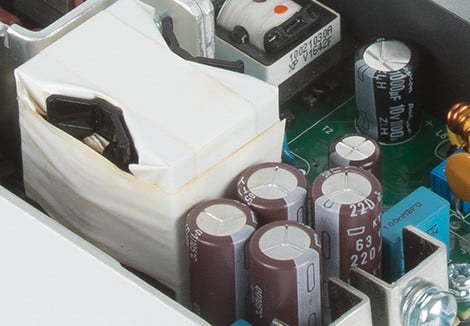
Perhaps the biggest takeaway from the show is that power design is no longer just an engineering checkbox. Intelligent, secure, and compact power solutions can accelerate development time, reduce costs, improve safety, and deliver deeper system insight. Growing PFA, RF (Radio Frequency), and HIFU (High Intensity Frequency Ultrasound), and microwave therapies are increasing demand for precise, stable, programmable power supplies with fast transient response, low ripple, and high reliability to safely control energy delivery in advanced medical devices.
As medical devices become smarter and more connected, power supplies are increasingly acting as trusted data sources, supporting both system monitoring and cybersecurity by helping protect communications and system integrity.
For companies like XP Power, the event reinforced how closely power innovation is tied to wider industry trends, with power supplies playing a central role in smarter, more connected medical systems.
Explore our range of medical power supplies, the leading solutions for high-performance medical devices and healthcare applications.

Simon Wheeler
Simon Wheeler is Vice President of Product Management at XP Power. He has decades of experience in design engineering and in leading global product management for blue-chip instrumentation, electronics, and software firms.


